Progress REPORT
Across the world, six organizations are building AI tools to prepare for, withstand and recover from our changing climate. Here is where they are after their first six months in the field.
Milkywire x Klarna, Sept 19, 2026

CLOSING REPORT
Nature Transformation Fund
Five years of funding initiatives tackling the interconnected crises of climate change, biodiversity loss, and human development.
Launched by Klarna and Milkywire in January 2026, the AI for Climate Resilience Program supports local innovators working with communities hit hardest by climate change.
The program provides funding, mentoring, and practical support to help teams turn promising ideas into useful tools that can help people prepare for climate risks, protect livelihoods, and manage resources more effectively.
Six months into the program, the most important progress is not always the most visible. Before AI tools can create meaningful climate resilience outcomes, teams need reliable data, trusted relationships, usable products and pathways into the institutions and communities that will ultimately use them.
Across the projects supported, those foundations are taking shape. This report looks at what has changed, what is beginning to work, and what the first six months are teaching us about using AI for climate resilience.

Sholto West
Program Manager at Milkywire
Foreword
As Klarna’s Nature Transformation Fund (NTF, formerly known as Give One) concludes its five-year journey, this report takes a look back at its impact and achievements. The challenges it set out to address have not disappeared. They are deep, systemic issues that require long-term, collective effort, and remain as pressing as ever. But have the projects made a lasting and meaningful difference? As you’ll soon see in this report, the answer is unequivocal: absolutely yes.
From empowering Indigenous communities to restore degraded forests high in the Andes, to safeguarding fragile deep-sea habitats from mining through bold policy work, to equipping rangers in Indonesia who protect critically endangered rhinos around the clock, the NTF has delivered vital resources to strengthen extraordinary projects led by exceptional organizations.
These projects are geographically and thematically diverse, yet all share one thing: a powerful ability to contribute meaningfully to the Fund’s three pillars—nature, climate, and people. This nexus is what made the NTF unique and why it has become a model for others looking to take meaningful action.
It has been an honor and a privilege to work with the talented team at Milkywire and my colleagues on the Advisory Board throughout these years. We know, as you do, that biodiversity continues to decline, climate change is accelerating, and social inequalities persist. But we also know that the world is undeniably better than it would have been without these projects. They are not a drop in the ocean, but seeds for the future. A future in which saving our planet is inseparable from saving ourselves.

Prof. Alexandre Antonelli
Member of the Advisory Board
Foreword
As Klarna’s Nature Transformation Fund (NTF, formerly known as Give One) concludes its five-year journey, this report takes a look back at its impact and achievements. The challenges it set out to address have not disappeared. They are deep, systemic issues that require long-term, collective effort, and remain as pressing as ever. But have the projects made a lasting and meaningful difference? As you’ll soon see in this report, the answer is unequivocal: absolutely yes.
From empowering Indigenous communities to restore degraded forests high in the Andes, to safeguarding fragile deep-sea habitats from mining through bold policy work, to equipping rangers in Indonesia who protect critically endangered rhinos around the clock, the NTF has delivered vital resources to strengthen extraordinary projects led by exceptional organizations.
These projects are geographically and thematically diverse, yet all share one thing: a powerful ability to contribute meaningfully to the Fund’s three pillars—nature, climate, and people. This nexus is what made the NTF unique and why it has become a model for others looking to take meaningful action.
It has been an honor and a privilege to work with the talented team at Milkywire and my colleagues on the Advisory Board throughout these years. We know, as you do, that biodiversity continues to decline, climate change is accelerating, and social inequalities persist. But we also know that the world is undeniably better than it would have been without these projects. They are not a drop in the ocean, but seeds for the future. A future in which saving our planet is inseparable from saving ourselves.
Prof. Alexandre Antonelli
Member of the Advisory Board
Chapter I: THE program at a glance
The six projects and how we support them
Chapter II: THE IMPACT
Part I:
Communities at the frontlines of change
Introduction, mention the names of the six projects & link to the AI program page.
Over the past five years, the Nature Transformation Fund has shown what is possible when long-term commitment, science-based guidance, and locally rooted action come together. As highlighted throughout this report, the journey has delivered clear results across ecosystems and communities, but it has also strengthened the organizations behind the work - in areas such as fundraising, impact measurement, communications and strategy - building capabilities that will endure long after the fund concludes. Organizations supported are now better equipped to sustain their work and scale impact even further.
We have seen the strength of the Fund’s nexus approach: addressing social and environmental issues together has led to more durable outcomes and validated the design of the impact framework. These five years have also shown that balancing short-term project results with long-term system change is essential, with policy and advocacy emerging as critical enablers for effective conservation.
For Klarna, the Nature Transformation Fund has enabled them to move beyond reducing emissions to supporting positive impact in places where it is most needed, while inspiring and allowing consumers and employees to do the same.
~
$
Million in total funding
+
hours of mentoring
Projects
Countries
Five objectives to measure what matters
Before the program began, we set five objectives to help us track whether these projects are building toward lasting climate resilience, not simply producing new AI tools. They look at whether the tools are being used, give communities more control, add real value, improve resilience, and can become part of the systems around them.
Six months in, we are starting to see progress across all five: AI tools moving into use, creating new value, and becoming embedded in the systems and communities around them. These are important indicators of whether the work can lead to lasting impact over time.
Over the past five years, the Nature Transformation Fund has shown what is possible when long-term commitment, science-based guidance, and locally rooted action come together. As highlighted throughout this report, the journey has delivered clear results across ecosystems and communities, but it has also strengthened the organizations behind the work - in areas such as fundraising, impact measurement, communications and strategy - building capabilities that will endure long after the fund concludes. Organizations supported are now better equipped to sustain their work and scale impact even further.
We have seen the strength of the Fund’s nexus approach: addressing social and environmental issues together has led to more durable outcomes and validated the design of the impact framework. These five years have also shown that balancing short-term project results with long-term system change is essential, with policy and advocacy emerging as critical enablers for effective conservation.
For Klarna, the Nature Transformation Fund has enabled them to move beyond reducing emissions to supporting positive impact in places where it is most needed, while inspiring and allowing consumers and employees to do the same.
01.
Adoption
02.
Empowerment

This includes adding AI-assisted task breakdowns, reminders, village progress tracking, peer learning and regular activation sessions to help communities organize, practise and sustain preparedness between disasters.
03.
AI-added value

If validated, a roughly $400 camera set-up could replace drone monitoring costing around $200 per visit, while shifting monitoring from a few seasonal measurements to continuous daily data.
04.
Impact
05.
System capacity & integration

The intervention is being designed around the institutions that would ultimately need to use and maintain it, creating a more credible pathway from pilot to sustained public-service delivery.
01.
Adoption
A technically strong tool only creates value if people actually use it. Early adoption tells us whether the solution fits real needs, behaviours and operating conditions.

Highlight
1,500+ biodiversity observations logged through GainForest’s tools. This is an early sign that the technology is moving beyond development into real-world use by local participants. It also creates the data foundation the wider conservation model depends on.
02.
Empowerment
Resilience does not come from the tool itself, but from strengthening communities’ own ability to organise, make decisions and act for themselves.
Highlight
Through four months of community workshops and testing, Saka Warga has evolved its AI Resilience Coach into a more interactive preparedness platform designed to better support behaviour change.
This includes adding AI-assisted task breakdowns, reminders, village progress tracking, peer learning and regular activation sessions to help communities organize, practise and sustain preparedness between disasters.
03.
AI-added value
AI should enable something materially better than the existing approach — greater scale, lower cost, better decisions or capabilities that were previously impractical.
Highlight
Acres of Ice has moved its camera-based AI volume-estimation model into active validation against drone surveys.
If validated, a roughly $400 camera set-up could replace drone monitoring costing around $200 per visit, while shifting monitoring from a few seasonal measurements to continuous daily data.
04.
Impact
Ultimately, the technology has to translate into improved resilience for people facing climate risks.

Highlight
Geotek has completed and commissioned three new groundwater systems, each capable of serving up to 15,000 people, and fitted them with remote monitoring to track performance and help maintain reliable water access over time.
05.
System capacity & integration
A pilot is more likely to last and scale when it strengthens existing institutions rather than creating a parallel system that disappears when project funding ends.
Highlight
SEEDS is designing its AI-enabled platform for integration into existing government systems, while embedding implementation in National and District Field Committees with government participation.
The intervention is being designed around the institutions that would ultimately need to use and maintain it, creating a more credible pathway from pilot to sustained public-service delivery.
Specialist support for complex, early-stage projects
Alongside funding, the projects receive specialist mentoring, practical training, and opportunities to learn from one another. This helps them work through technical and real-world challenges as they develop their tools, and make stronger decisions about what comes next. One-to-one mentoring connects teams with expertise they may not have in-house, from AI architecture and data engineering to climate science, community governance, and fundraising. Seminars and masterclasses address challenges shared across the cohort, while the Community of Practice gives teams a place to exchange ideas and learn from each other’s experience.
Systems-design mentor Oliver Paul has worked with two projects on AI architecture and technical strategy. Together, they have examined technical decisions, worked through problems, and identified where stronger underlying systems are needed before more advanced AI can add value.
Over the past five years, the Nature Transformation Fund has shown what is possible when long-term commitment, science-based guidance, and locally rooted action come together. As highlighted throughout this report, the journey has delivered clear results across ecosystems and communities, but it has also strengthened the organizations behind the work - in areas such as fundraising, impact measurement, communications and strategy - building capabilities that will endure long after the fund concludes. Organizations supported are now better equipped to sustain their work and scale impact even further.
We have seen the strength of the Fund’s nexus approach: addressing social and environmental issues together has led to more durable outcomes and validated the design of the impact framework. These five years have also shown that balancing short-term project results with long-term system change is essential, with policy and advocacy emerging as critical enablers for effective conservation.
For Klarna, the Nature Transformation Fund has enabled them to move beyond reducing emissions to supporting positive impact in places where it is most needed, while inspiring and allowing consumers and employees to do the same.
“Technical guidance from Oliver strengthened our thinking around AI architecture, data engineering, system design, responsible AI, and long-term technology development.”
Geotek Water Solutions Ltd.
Early technical choices shape whether these tools become robust, responsible and scalable. Specialist mentoring gives organizations access to expertise they often do not have in-house — at the point when those decisions are being made.
Over the past five years, the Nature Transformation Fund has shown what is possible when long-term commitment, science-based guidance, and locally rooted action come together. As highlighted throughout this report, the journey has delivered clear results across ecosystems and communities, but it has also strengthened the organizations behind the work - in areas such as fundraising, impact measurement, communications and strategy - building capabilities that will endure long after the fund concludes. Organizations supported are now better equipped to sustain their work and scale impact even further.
We have seen the strength of the Fund’s nexus approach: addressing social and environmental issues together has led to more durable outcomes and validated the design of the impact framework. These five years have also shown that balancing short-term project results with long-term system change is essential, with policy and advocacy emerging as critical enablers for effective conservation.
For Klarna, the Nature Transformation Fund has enabled them to move beyond reducing emissions to supporting positive impact in places where it is most needed, while inspiring and allowing consumers and employees to do the same.
CHAPTER II: From ideas to implementation
Progress & learnings from the first six months
Chapter V: LOOKING ahead
Closing remarks and the next chapter
Real impact happens when ideas meet action. These six projects harness the power of AI for climate resilience and adaptation, turning innovation into practical solutions that help communities prepare for and respond to a changing climate.
From building disaster resilience and protecting biodiversity to securing vital resources like water and food, they empower those on the frontlines to adapt and thrive.
Real impact happens when ideas meet action. These six projects harness the power of AI for climate resilience and adaptation, turning innovation into practical solutions that help communities prepare for and respond to a changing climate.
From building disaster resilience and protecting biodiversity to securing vital resources like water and food, they empower those on the frontlines to adapt and thrive.
Nigeria
Geotek Water Solutions Ltd
3 of 5 planned water systems have been completed and commissioned, and 25 monitoring devices are now installed and streaming live data.
India
SEEDS
Five pilot districts have been selected, community risk registers, which identify and prioritise key local risks are complete in 3 of 5 pilot districts. In parallel, more than 27,000 households have been surveyed to help identify which families are most at risk and how support can be targeted before and after disasters.
Nigeria
Geotek Water Solutions Ltd
Goal
More reliable access to groundwater during climate stress, enabled by AI monitoring and predictive maintenance of water infrastructure.
Progress
3 of 5 planned water systems have been completed and commissioned, and 25 monitoring devices are now installed and streaming live data.
India
SEEDS
Goal
Faster access to disaster compensation and support for vulnerable households, enabled by AI that verifies losses and connects eligible families to government and donor schemes.
Progress
Five pilot districts have been selected, community risk registers, which identify and prioritise key local risks are complete in 3 of 5 pilot districts. In parallel, more than 27,000 households have been surveyed to help identify which families are most at risk and how support can be targeted before and after disasters.
India
Acres of Ice
12 domestic sites are running, construction is underway at international sites in Nepal and Kyrgyzstan, and a camera-based AI model for estimating the volume of ice stored in the reservoirs is being validated against drone surveys.

India
SEWA / IFPRI / Gram Vaani
The chatbot’s knowledge base is nearly complete, bringing together SEWA’s climate, health, finance and livelihood guidance in AI-ready formats. Occupation profiling has been completed across all four worker groups (construction workers, farmers, vendors and home-based workers.), and 80+ members have taken part in the first needs assessment.
India
Acres of Ice
Goal
More reliable irrigation water for mountain communities through artificial ice reservoirs, with AI improving the planning, monitoring, and efficiency of these structures.
Progress
12 domestic sites are running, construction is underway at international sites in Nepal and Kyrgyzstan, and a camera-based AI model for estimating the volume of ice stored in the reservoirs is being validated against drone surveys.
India
SEWA / IFPRI / Gram Vaani
Goal
Reduced vulnerability for women informal workers by helping them anticipate climate risks and protect their health and livelihoods, with AI scaling trusted local guidance into timely, relevant alerts and practical advice.
Progress
The chatbot’s knowledge base is nearly complete, bringing together SEWA’s climate, health, finance and livelihood guidance in AI-ready formats. Occupation profiling has been completed across all four worker groups (construction workers, farmers, vendors and home-based workers.), and 80+ members have taken part in the first needs assessment.
Indonesia
Saka Warga
Community feedback expanded the concept into a six-component preparedness platform, now ready for phased rollout across 7 pilot villages. The AI draws on validated disaster-preparedness guidance, localised to each village’s own risks and resources. Its scope is deliberately limited to preparedness rather than live emergency response.
Brazil
GainForest
An offline-first app has been developed, 1,500+ biodiversity observations have been logged, and local champions are now being paid to collect data.
Indonesia
Saka Warga
Goal
Reduced vulnerability to disasters by helping communities plan, practise and stay prepared, with AI adapting standard disaster-preparedness guidance to local risks, language and context — from preparedness plans to village-level disaster drills.
Progress
Community feedback expanded the concept into a six-component preparedness platform, now ready for phased rollout across 7 pilot villages. The AI draws on validated disaster-preparedness guidance, localised to each village’s own risks and resources. Its scope is deliberately limited to preparedness rather than live emergency response.
Brazil
GainForest
Goal
Stronger community stewardship of nature and better pathways to conservation finance, enabled by AI-supported biodiversity data collection, classification and community ownership.
Progress
An offline-first app has been developed, 1,500+ biodiversity observations have been logged, and local champions are now being paid to collect data.
Three lessons from the first six months
Across very different projects and contexts, the first six months are surfacing recurring lessons about what it actually takes to build useful AI for climate resilience.
Over the past five years, the Nature Transformation Fund has shown what is possible when long-term commitment, science-based guidance, and locally rooted action come together. As highlighted throughout this report, the journey has delivered clear results across ecosystems and communities, but it has also strengthened the organizations behind the work - in areas such as fundraising, impact measurement, communications and strategy - building capabilities that will endure long after the fund concludes. Organizations supported are now better equipped to sustain their work and scale impact even further.
We have seen the strength of the Fund’s nexus approach: addressing social and environmental issues together has led to more durable outcomes and validated the design of the impact framework. These five years have also shown that balancing short-term project results with long-term system change is essential, with policy and advocacy emerging as critical enablers for effective conservation.
For Klarna, the Nature Transformation Fund has enabled them to move beyond reducing emissions to supporting positive impact in places where it is most needed, while inspiring and allowing consumers and employees to do the same.
01.
Hardware and data quality come before AI.
Across the cohort, much of the first six months has been spent building the physical and data foundations AI depends on: deploying and improving sensors, establishing data streams, preparing reliable databases, adapting technology for low-connectivity settings, and collecting large volumes of household and climate data.
This work is labour-intensive and depends on organizations with deep local relationships, able to generate data that reflects people’s real circumstances and vulnerabilities. Without reliable hardware and high-quality, locally relevant data, the AI layer has little to work with.
Over the past five years, the Nature Transformation Fund has shown what is possible when long-term commitment, science-based guidance, and locally rooted action come together. As highlighted throughout this report, the journey has delivered clear results across ecosystems and communities, but it has also strengthened the organizations behind the work - in areas such as fundraising, impact measurement, communications and strategy - building capabilities that will endure long after the fund concludes. Organizations supported are now better equipped to sustain their work and scale impact even further.
We have seen the strength of the Fund’s nexus approach: addressing social and environmental issues together has led to more durable outcomes and validated the design of the impact framework. These five years have also shown that balancing short-term project results with long-term system change is essential, with policy and advocacy emerging as critical enablers for effective conservation.
For Klarna, the Nature Transformation Fund has enabled them to move beyond reducing emissions to supporting positive impact in places where it is most needed, while inspiring and allowing consumers and employees to do the same.
“The most significant learning was that the primary challenge was not developing an AI assistant capable of answering preparedness questions, but determining how AI could meaningfully support long-term preparedness behaviours.”
Sakawarga
“At Klarna, we believe the true potential of AI lies in its ability to drive real-world change. Through AI for Climate Resilience, we’re using technology to empower communities to turn data into action — building resilience, protecting livelihoods, and accelerating adaptation where it’s needed most.”
David Sandström, Chief Marketing Officer, Klarna
02.
Information alone doesn’t change behaviour.
AI can make climate information more accessible and relevant, but lasting behaviour change depends on more than information alone. Across the cohort, projects are combining guidance with practical tasks, reminders and reinforcement, opportunities to practise, and social reinforcement to help people build new routines and act more consistently in response to climate risks.
Over the past five years, the Nature Transformation Fund has shown what is possible when long-term commitment, science-based guidance, and locally rooted action come together. As highlighted throughout this report, the journey has delivered clear results across ecosystems and communities, but it has also strengthened the organizations behind the work - in areas such as fundraising, impact measurement, communications and strategy - building capabilities that will endure long after the fund concludes. Organizations supported are now better equipped to sustain their work and scale impact even further.
We have seen the strength of the Fund’s nexus approach: addressing social and environmental issues together has led to more durable outcomes and validated the design of the impact framework. These five years have also shown that balancing short-term project results with long-term system change is essential, with policy and advocacy emerging as critical enablers for effective conservation.
For Klarna, the Nature Transformation Fund has enabled them to move beyond reducing emissions to supporting positive impact in places where it is most needed, while inspiring and allowing consumers and employees to do the same.
“The key shift in our thinking was realising that communities do not have to choose between control of their data and ease of use. They can decide who has access to their data, revoke access when they choose, export it, or store it locally.”
Gainforest
“At Klarna, we believe the true potential of AI lies in its ability to drive real-world change. Through AI for Climate Resilience, we’re using technology to empower communities to turn data into action — building resilience, protecting livelihoods, and accelerating adaptation where it’s needed most.”
David Sandström, Chief Marketing Officer, Klarna
03.
Product development and usability are becoming impact capabilities.
For many public-benefit organizations, building AI means developing a new kind of capability: product development. Teams are having to learn how to design, test and iterate digital tools around real user needs — navigating connectivity, language, digital literacy, incentives and local context — while still delivering on their core climate or social mission.
Over the past five years, the Nature Transformation Fund has shown what is possible when long-term commitment, science-based guidance, and locally rooted action come together. As highlighted throughout this report, the journey has delivered clear results across ecosystems and communities, but it has also strengthened the organizations behind the work - in areas such as fundraising, impact measurement, communications and strategy - building capabilities that will endure long after the fund concludes. Organizations supported are now better equipped to sustain their work and scale impact even further.
We have seen the strength of the Fund’s nexus approach: addressing social and environmental issues together has led to more durable outcomes and validated the design of the impact framework. These five years have also shown that balancing short-term project results with long-term system change is essential, with policy and advocacy emerging as critical enablers for effective conservation.
For Klarna, the Nature Transformation Fund has enabled them to move beyond reducing emissions to supporting positive impact in places where it is most needed, while inspiring and allowing consumers and employees to do the same.
Give One was launched by Klarna in 2021, in partnership with Milkywire, to tackle some of the most critical environmental issues facing our planet. A call to action that set out to address the global funding gap for the interconnected crises of climate change, biodiversity loss, and human development, at a time when nature-based solutions received only around 3% of the financing they required *. As a global company with millions of consumers and hundreds of thousands of business partners, Klarna saw an opportunity to use its platform to drive meaningful change beyond its own operations, while empowering consumers worldwide to join the movement. The initiative was made possible through Klarna’s commitment to donate 1% of equity raised in funding rounds, reflecting a belief that value creation must go hand in hand with value sharing. Expert-led and science-based, Give One was run by Milkywire under a clear Impact Framework, with an independent Advisory Board providing strategic guidance. Funding decisions followed defined principles and due diligence to ensure alignment and accountability. As the initiative evolved, the portfolio of supported projects was formalized under the name Nature Transformation Fund.
* UNEP, State of Finance for Nature 2021
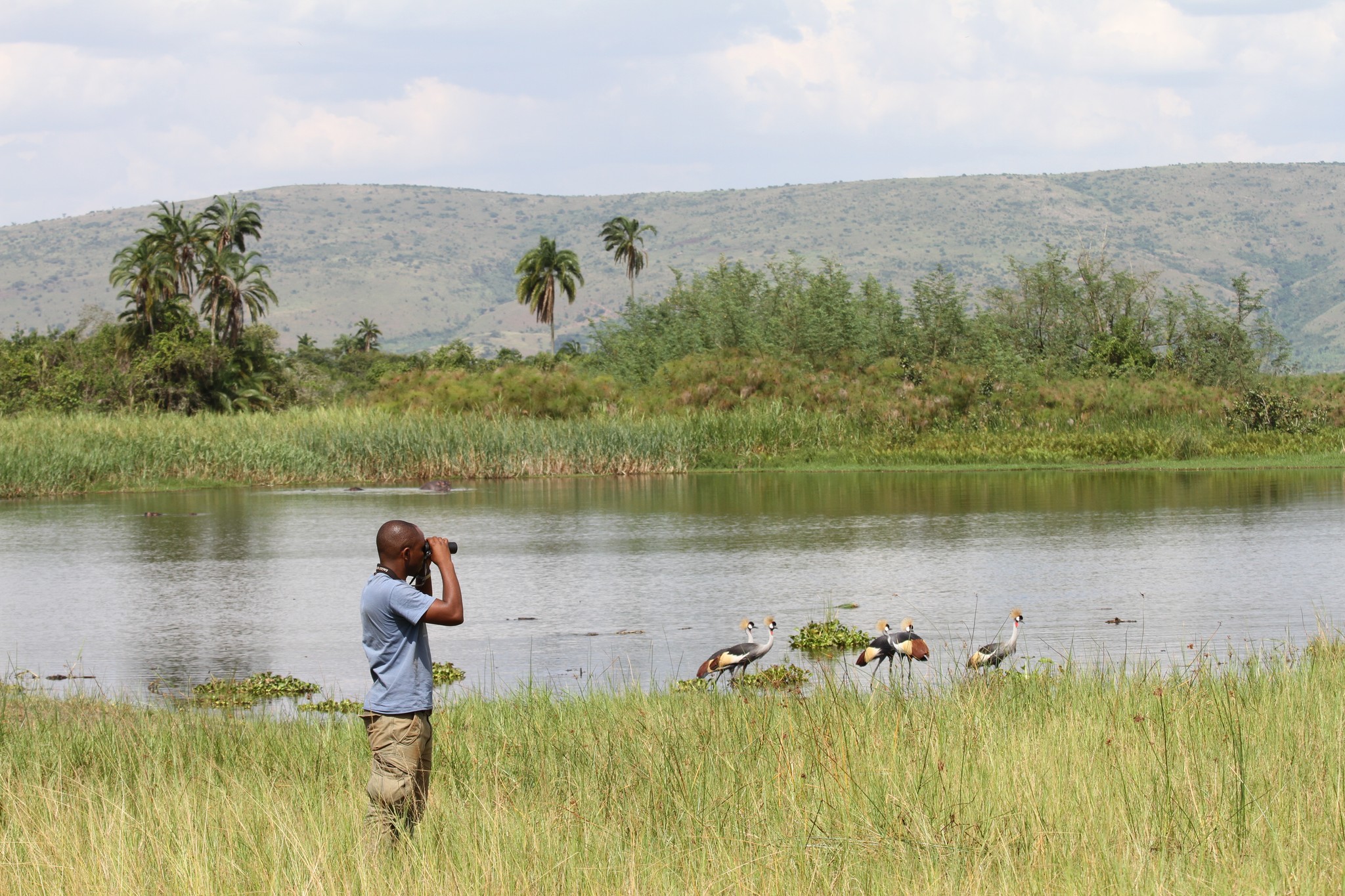
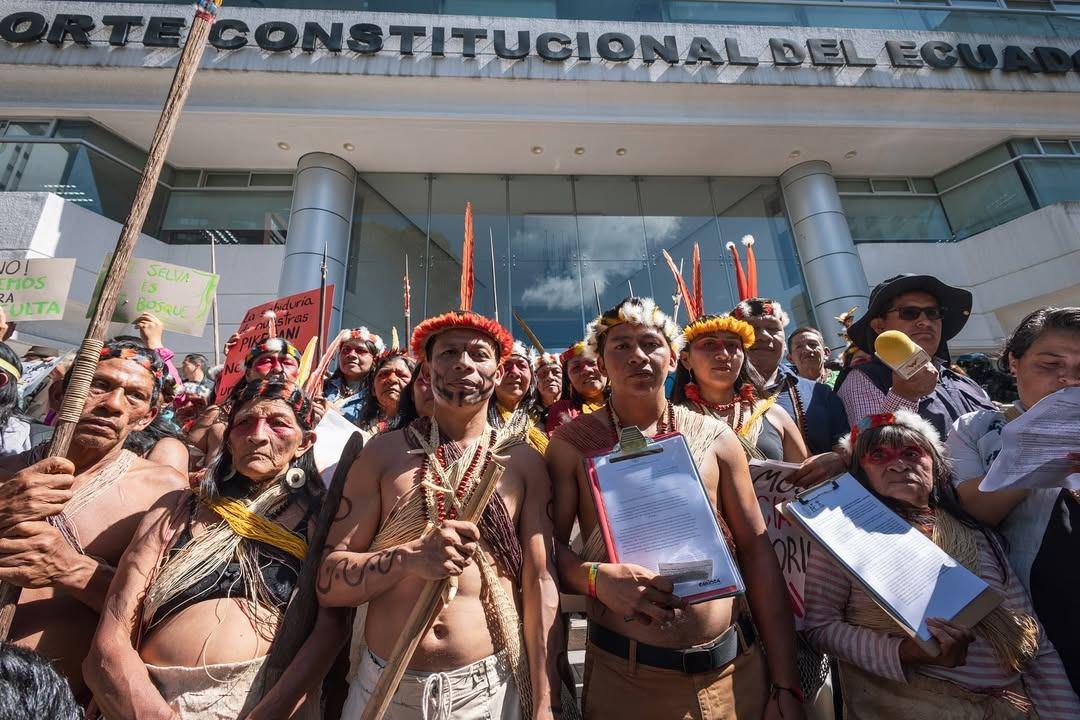
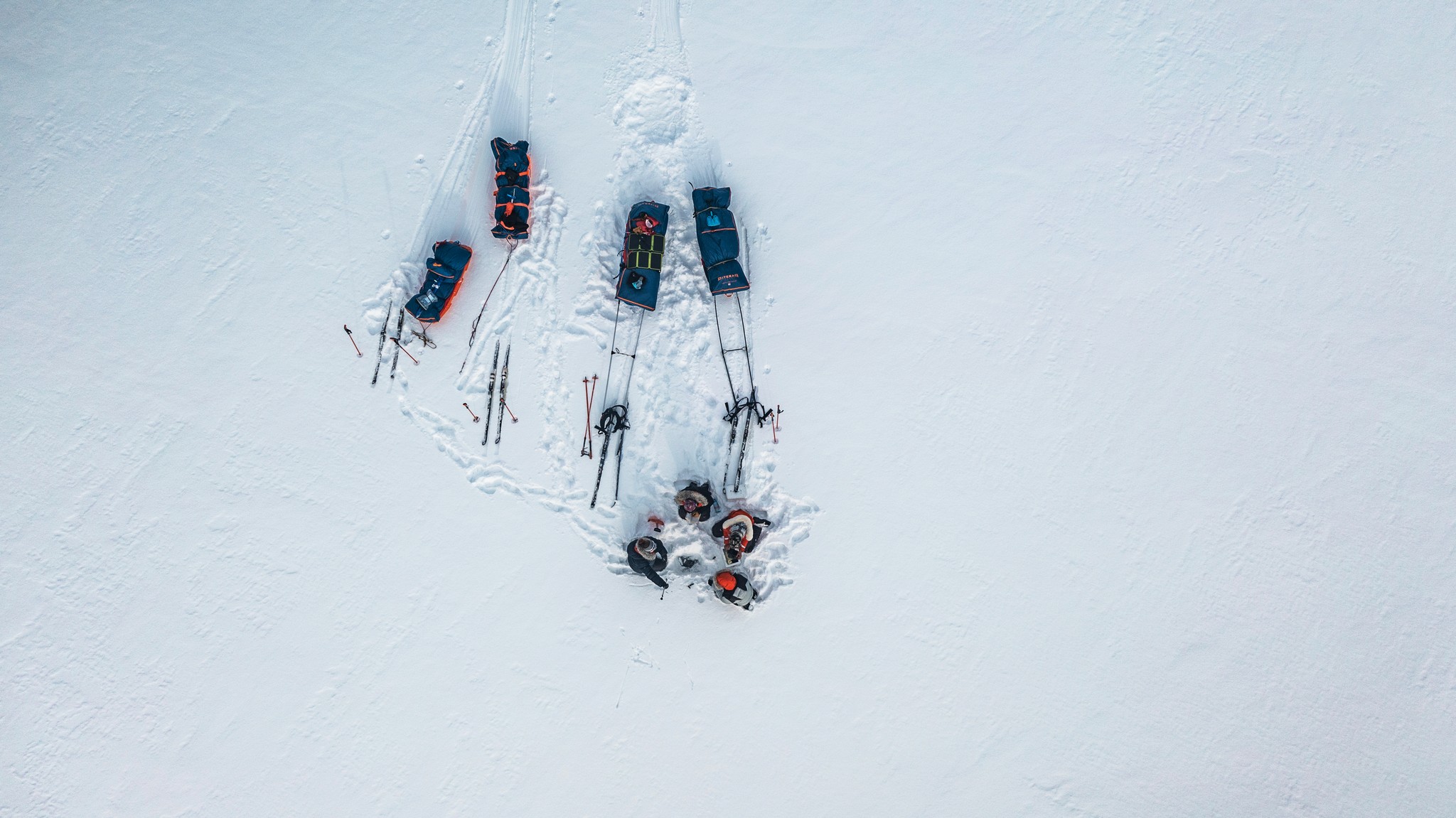
Give One was launched by Klarna in 2021, in partnership with Milkywire, to tackle some of the most critical environmental issues facing our planet. A call to action that set out to address the global funding gap for the interconnected crises of climate change, biodiversity loss, and human development, at a time when nature-based solutions received only around 3% of the financing they required.
* UNEP, State of Finance for Nature 2021
As a global company with millions of consumers and hundreds of thousands of business partners, Klarna saw an opportunity to use its platform to drive meaningful change beyond its own operations, while empowering consumers worldwide to join the movement.
The initiative was made possible through Klarna’s commitment to donate 1% of equity raised in funding rounds, reflecting a belief that value creation must go hand in hand with value sharing.
Expert-led and science-based, Give One was run by Milkywire under a clear Impact Framework, with an independent Advisory Board providing strategic guidance. Funding decisions followed defined principles and due diligence to ensure alignment and accountability.
As the initiative evolved, the portfolio of supported projects was formalized under the name Nature Transformation Fund.
CHAPTER III: LOOKING AHEAD
Closing remarks & what comes next
Chapter V: LOOKING ahead
Closing remarks and the next chapter
The next phase will test whether these foundations translate into wider adoption and measurable resilience outcomes as tools move further into deployment, validation and use.
We will continue to share what we learn, engage in conversations that move the field forward, and contribute to a better understanding of how AI can be used responsibly and effectively for climate resilience.
With a new group of projects already selected for this year, we will also continue supporting promising innovators where funding, technical support, and the right partnerships can unlock greater impact.
Bridging the digital divide through essential skills building
As the Nature Transformation Fund concludes, Klarna is ensuring that the organizations it has supported continue to thrive in an increasingly digital world. AI could transform frontline impact, but right now it’s not reaching the non-profits who need it the most. Together with Climate Collective, Klarna is supporting organizations that have been part of the Nature Transformation Fund to adopt generative AI tools to enhance their environmental and social impact even further.
Through the AI skills-building accelerator AI for Earth, non-profit partners will be equipped with essential skills needed to leverage emerging digital tools which will benefit them as they further their missions in years to come.

© Milkywire AB, 2025. All rights reserved. Mailbox 3306, 112 73 Stockholm, Sweden. All donations are handled by WRLD Foundation Sweden (registered with org ID No "802526 - 9328") and WRLD Foundation US (registered 501(c)(3) charity).
© Milkywire AB, 2025. All rights reserved. Mailbox 3306, 112 73 Stockholm, Sweden. All donations are handled by WRLD Foundation Sweden (registered with org ID No "802526 - 9328") and WRLD Foundation US (registered 501(c)(3) charity).